Hi all!
I’m Aaron Flicker
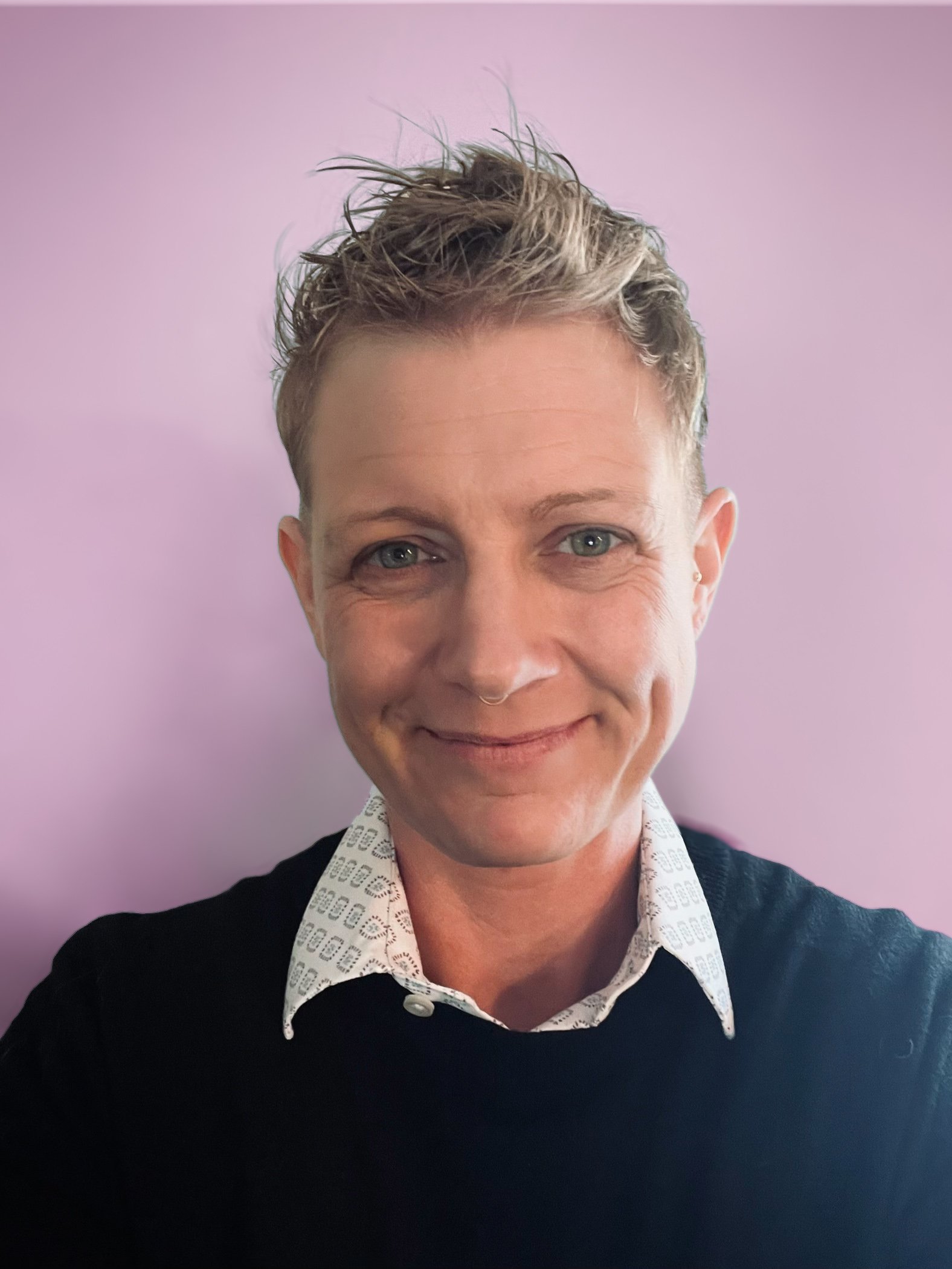
I am a queer, trans, white, AuDHD (Autistic + ADHD) clinical social worker, and I started Resonant Minds because I wanted to create space for the kind of informed, neurodiversity-affirming assessment experience I wish more of us had access to. Resonant Minds is my way of reclaiming assessment as a site of liberation, not harm, and bringing care that centers identities and lived experience to the community.
My background spans clinical work, systems design/disruption, and equity centered evaluation. I earned my MSW in 2009 and spent over a decade doing diagnostic assessments and therapy with both children and adults. After ongoing observation of the ways our systems pathologize difference while ignoring the conditions that create distress, I shifted much of my work to changing systems and policy. I received a PhD in Organizational Leadership, Policy, and Development, where my work focuses on how meaning is constructed within systems, how we build structures that truly support people, and how we interrupt the reproduction of inequity by centering lived experience. For the last 15-20 years, I’ve been actively unlearning the ways I was socialized in white supremacy culture and capitalist, patriarchal norms, and I now ground my work in collective liberation, shared power, and community accountability.
My Approach
My approach to my work is based in the relationships I create with people. I am grounded in feminist, anti-racist, trauma-informed and neurodiversity-affirming perspectives. I have zero desire to employ deficit-based, pathologizing models that reduce people to diagnostic criteria or require masking to be “credible”. Instead, I work to help people make sense of their internal world, uncover patterns, and understand their neurotype in a way that feels grounding, liberating, and deeply human.
I specialize in working with adults, particularly women and AFAB people, the queer community, and those who have felt overlooked, misunderstood, or have been misdiagnosed in systems designed around narrow norms. I have done extensive work to understand the subtle and complex nuances of masking and social imitation across autistic lives and the wide-ranging variety of special interests that don’t necessarily match traditional stereotypes. I deeply know the ways in which some autistic folks can have highly developed relational and social analysis skills that often lead simultaneously to presenting with social “skills” and deep overwhelm. I love reading the clinical literature about misdiagnosis and growing in my understanding of the long-standing negligence to incorporate gender, trauma, and systems of oppression into traditional assessments. It’s important to acknowledge that racism and white supremacy have shaped who is seen, who is believed, and who is diagnosed with autism and ADHD. Black, Indigenous, and other people of color are often misidentified, underdiagnosed, or labeled with stigmatizing diagnoses instead. I feel it is important to name explicitly that my experiences are grounded in the privilege that my whiteness has afforded me, however, I work intentionally to recognize these patterns, adapt my assessment processes with cultural responsiveness, and avoid reinforcing structural harm. If you are looking for a place that values complexity, honors your lived experience, and approaches the assessment process as one of meaning-making, then we may work well together!
My Leadership Experience
My leadership experience spans clinical, organizational, nonprofit, and public sector settings.
I have served in executive and director-level roles, leading both small and large teams, and find the most joy through developing staff, strategy, and infrastructure across behavioral health and health policy environments. This has included building and supervising teams, supporting new social workers and behavioral health clinicians through clinical supervision since 2011, and navigating complex organizational and system-level expectations.
In my consulting work through Flicker Consulting, I partner with government agencies, foundations, and community-based organizations to design and implement systems change initiatives, often working at the intersection of policy, practice, and community engagement.
Across these roles, my leadership has required ongoing decision-making within environments that are ambiguous, resource-constrained, and shaped by institutional norms that show up regularly around communication, credibility, and performance.
My experience as a leader across the settings, navigating my own processes of masking, burnout, and learning authentic leadership skills, and my clinical expertise inform my work with neurodivergent leaders, especially in understanding how masking, adaptation, power dynamics, and system constraints shape how leadership is enacted in practice.
Interested in working together?
Reach out and to schedule time to see if we are a good fit.